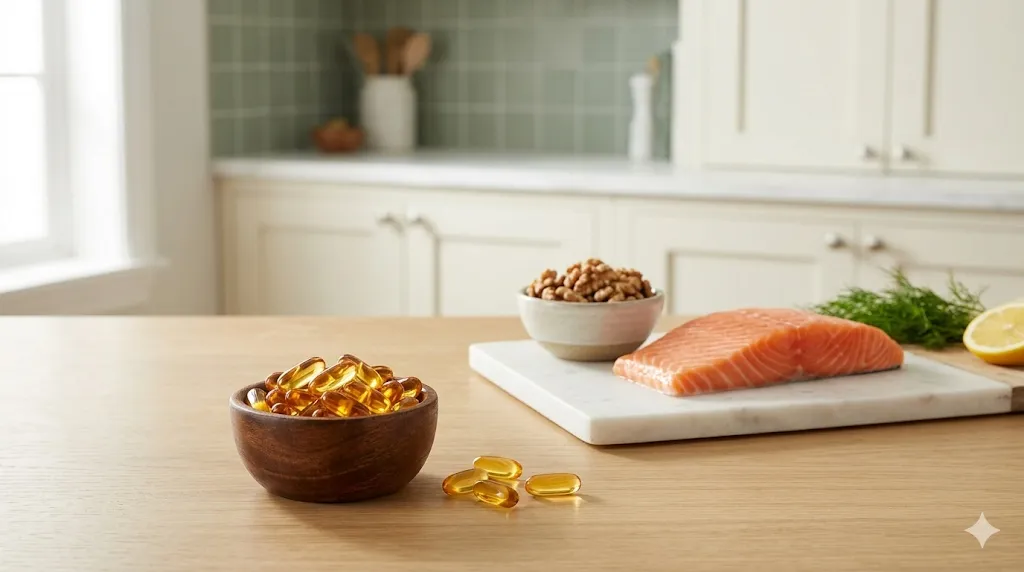
Omega-3 fatty acids (EPA and DHA) from fish or algae oil are among the best-studied supplements for fatty liver. They can lower liver fat – but based on current evidence they don't cure fatty liver inflammation. Here is an honest overview.
What the studies show
A meta-analysis in the Journal of Hepatology (Parker et al., 2012) pooled 9 studies with 355 participants: omega-3 clearly reduced liver fat compared with control groups. The effect on liver enzymes was weaker – in the randomized trials alone it was not significant for ALT or AST. Later reviews paint a similar picture: omega-3 works against liver fat, but results for inflammation and scarring (fibrosis) are mixed.
How omega-3 works
- Lower triglycerides: EPA and DHA slow fat production in the liver and lower blood lipids.
- Anti-inflammatory: omega-3s are converted into messengers that help resolve inflammation.
- Correcting a shortfall: people with fatty liver often have less long-chain omega-3 in their liver.
Dosage
The optimal dose is unclear. Many studies used about 1–4 g of EPA + DHA per day. What counts is the amount of EPA and DHA, not "fish oil" on the label – 1,000 mg of fish oil often provides only 300 mg of EPA/DHA. Higher doses only after talking to your doctor.
Fish instead of pills?
Two servings of oily fish a week (salmon, herring, mackerel, sardines) fit the Mediterranean diet that European guidelines recommend for fatty liver. Fish alone usually doesn't reach therapeutic amounts – that's where supplements help.
What to look for when buying
- EPA/DHA per daily serving clearly stated (not just "fish oil").
- Purity: third-party seals (e.g. IFOS, USP) for heavy metals and oxidation.
- Form: triglyceride form (rTG) is absorbed slightly better than ethyl esters; take with a meal containing fat.
- Algae oil is the vegan alternative and provides mainly DHA.
Safety
Omega-3 is well tolerated; fishy burps and digestive upset are possible. At higher doses it can affect blood clotting – check with your doctor if you take blood thinners or before surgery. In some studies, high-dose omega-3 was linked to a slightly higher risk of atrial fibrillation.
The basics are in our fatty liver guide; other nutrients: choline and milk thistle.
When to see a doctor
Always have raised liver enzymes, upper abdominal pain or yellowing checked – omega-3 is no substitute for a diagnosis.
Frequently asked questions
Can omega-3 reverse fatty liver? It can lower liver fat, but healing of inflammation or scarring is not proven. Weight loss and exercise remain the foundation.
How much omega-3 for fatty liver? Studies mostly used 1–4 g of EPA + DHA daily; the best dose is unclear.
Fish oil or algae oil? Both provide omega-3; algae oil is vegan and mainly contains DHA.
Third-party tested omega-3 supplements with high EPA/DHA content can be found in our recommendations below.