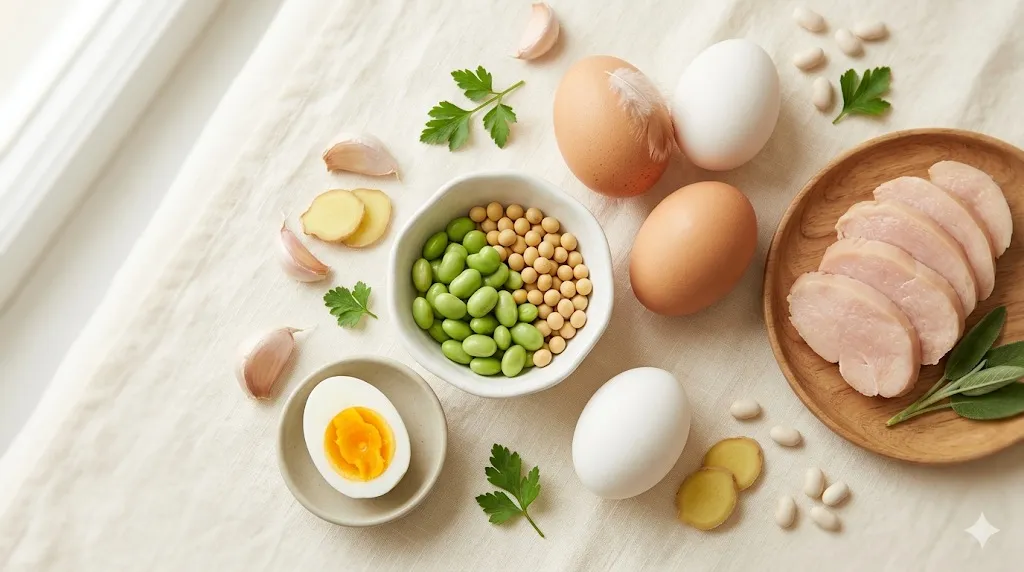
Choline is an essential nutrient indispensable for transporting fat out of the liver. A deficiency leads directly to fat storage – i.e. fatty liver.
The role of choline
Choline is a building block of phosphatidylcholine, which carries fat out of the liver. Without it, fat piles up in liver cells. Many people get too little from diet.
Good sources
- Eggs (especially the yolk)
- Liver and lean meat
- Soybeans and legumes
- Supplements (choline bitartrate)
Dosage
Daily needs are about 425 mg (women) to 550 mg (men). Those who eat few eggs and little meat often benefit from supplementation.
Caution & when to see a doctor
Very high doses can cause a fishy body odor, digestive upset or low blood pressure. Stay within the recommended range – according to the US NIH, the upper limit for adults is 3,500 mg per day from food and supplements combined. With known liver disease, discuss supplementation with your doctor.
FAQ
Are eggs enough? Two eggs cover much of the daily need; with an egg-poor diet a supplement can help.
Choline and liver fat? Adequate choline is a prerequisite for fat to leave the liver at all.
What is choline bitartrate? One of the common forms of choline in supplements, alongside phosphatidylcholine and lecithin (source: NIH Office of Dietary Supplements). For dosing, what counts is the stated choline content, not the weight of the salt.
You'll find quality choline supplements in our recommendations below.