Non-alcoholic fatty liver disease – internationally renamed MASLD (metabolic dysfunction-associated steatotic liver disease) in 2023 – is the most common liver condition in the Western world, affecting about one in four adults. The good news: in early stages it is usually fully reversible – without medication, through consistent lifestyle changes alone. This guide explains the causes, diagnosis and a practical path back to a healthy liver.
What is fatty liver?
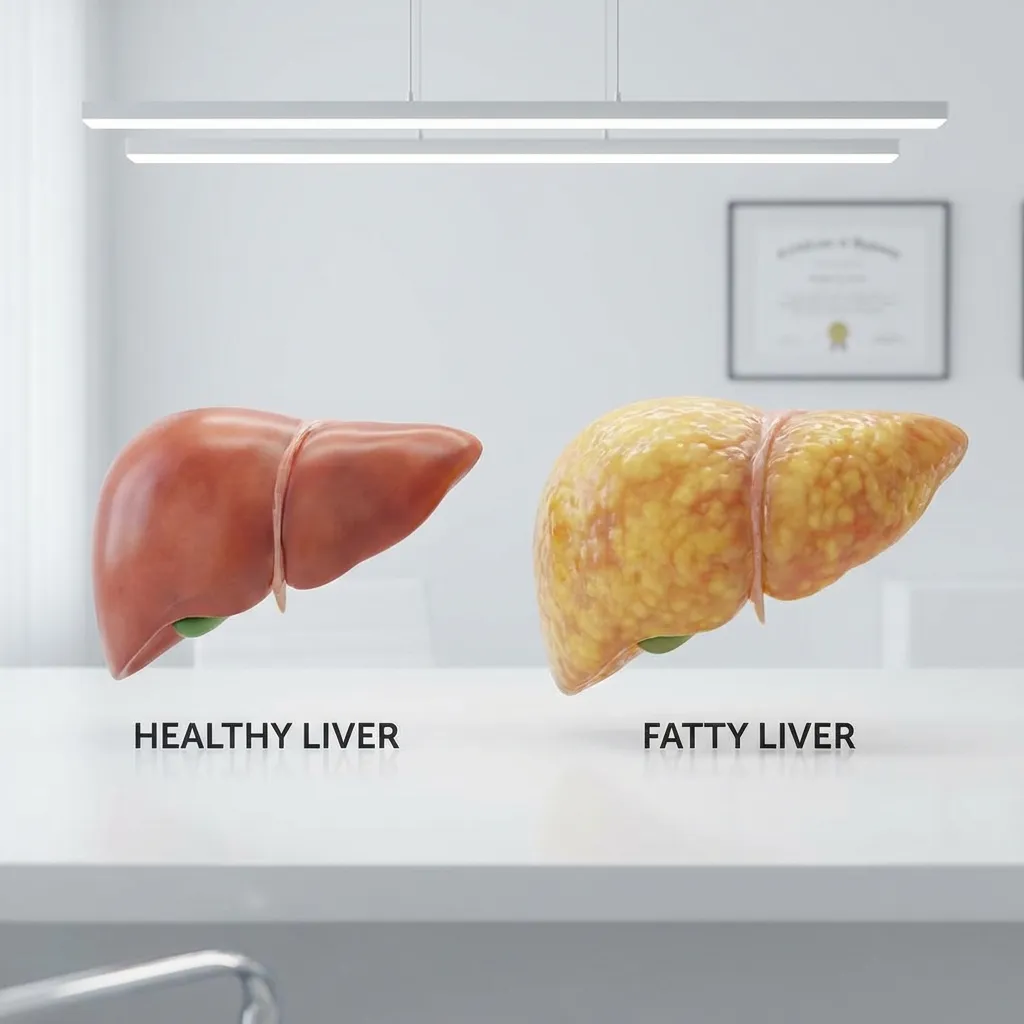
Fatty liver means that more than 5% of the liver's weight is stored fat. Doctors distinguish several stages:
- Simple steatosis: fat accumulation without significant inflammation – highly reversible.
- Steatohepatitis (NASH/MASH): fat plus inflammation that damages liver cells.
- Fibrosis: early scarring of the tissue caused by chronic inflammation.
- Cirrhosis: advanced, barely reversible scarring with loss of function.
The earlier you act, the better – in the first two stages the liver usually recovers completely.
How does fatty liver develop?
The main driver is not dietary fat but too much sugar and fast carbohydrates. Fructose in particular – from soft drinks, juices and processed foods – is converted directly into fat in the liver (de novo lipogenesis). At the same time, chronically high blood sugar causes insulin resistance: cells respond less to insulin and the liver stores even more fat – a vicious cycle. Other factors:
- Overweight, especially visceral belly fat
- Lack of exercise
- Insulin resistance, type 2 diabetes and metabolic syndrome
- Unfavourable blood lipids (high triglycerides, low HDL)
- Certain medications and excessive alcohol (then: alcoholic fatty liver)
Symptoms & warning signs
Fatty liver often runs for years without symptoms, which makes it deceptive. Possible non-specific signs are persistent fatigue, difficulty concentrating and a feeling of pressure in the upper right abdomen. It is frequently found by chance on an ultrasound or via elevated liver values.
Diagnosis: the values that count
Blood liver values give the first clues – especially ALT, AST and GGT – along with a liver ultrasound. To estimate scarring, scores such as FIB-4 and techniques like elastography (FibroScan) are used; a raised Fatty Liver Index (FLI) can also point the way. Important: always have elevated values assessed by a doctor to rule out other causes (viral hepatitis, medication, autoimmune disease).
The most important steps to reverse it
Treating fatty liver is more than 90% lifestyle. These five levers have the strongest evidence:
- Drastically cut sugar & white flour – the single most effective step. Eliminate soft drinks and fruit juices, swap white flour for whole grain.
- Lose 7–10% of body weight – this clearly lowers liver fat; from about 10% even early inflammation (NASH) can regress. Even 5% gives measurable effects.
- Combine exercise – at least 150 minutes of endurance per week plus 2× strength training. Exercise lowers liver fat even without weight loss.
- Healthy fats instead of trans fats – olive oil, nuts and omega-3 from oily fish instead of fried, heavily processed foods.
- Avoid alcohol – it adds to the liver's burden and slows regeneration.
Nutrition in detail
The best-studied approach is the Mediterranean diet: plenty of vegetables, legumes, whole grains, olive oil and fish; little sugar, red and processed meat. Coffee (unsweetened) is considered liver-protective in studies – two to three cups a day are linked to better liver values. When losing weight, ensure enough protein to preserve muscle. Which foods support the liver most is covered in our overview 10 foods your liver loves.
A simple sample day: oats with berries and nuts in the morning; a large salad with legumes and olive oil at midday; steamed fish with vegetables in the evening. Between meals, water or unsweetened tea instead of juices.
Exercise: why it works so well
Muscle work improves insulin sensitivity and burns liver fat directly. The combination of endurance training (brisk walking, cycling, swimming) and strength training works better than either alone. Consistency is key – better 30 minutes daily than one extreme session a week.
Which nutrients can help?
Supplements do not replace lifestyle change but can support it. These active ingredients are the best studied – each with its own detailed article:
- Milk thistle (silymarin) – traditional liver protection with antioxidant effect.
- Omega-3 fatty acids – demonstrably lower liver fat.
- Choline – important for transporting fat out of the liver.
- NAC & glutathione – building blocks of the body's own detoxification.
- Turmeric (curcumin) – with anti-inflammatory effect.
- Artichoke and dandelion – support bile and liver metabolism.
Always discuss use with a doctor if you have pre-existing conditions or take medication.
Common myths
"Only alcohol causes fatty liver." False – the most common form today is the non-alcoholic one, driven by sugar and excess weight.
"A detox cleanse purges the liver." No tea or juice cure "flushes out" liver fat. What truly helps is a lasting change in diet and exercise.
Progress & monitoring
First improvements in liver values often appear after three months of consistent change. Have your values and, if needed, an ultrasound checked to track progress and stay motivated.
When to see a doctor
Seek medical advice for persistently elevated liver values, severe pressure pain in the upper abdomen, yellowing of the skin or eyes, or if you have diabetes or metabolic syndrome. These belong in expert hands.
Frequently asked questions
Is fatty liver curable? In early stages yes – the liver often regenerates completely with consistent change.
How long does reversal take? First improvements in liver values are often measurable after 3 months; a clear reduction in liver fat after 6–12 months.
Is losing weight enough? Weight loss is the strongest lever, but works best combined with cutting sugar and exercise.
What role does fructose play? Fructose from soft drinks and juices especially promotes fat formation in the liver and should be avoided.
Are supplements necessary? No – they can support, but never replace, changes to diet and exercise.
High-quality liver complexes with standardised silymarin can be found in our vetted recommendations below.

![NatureWise Curcumin Turmeric 2250mg - Advanced Absorption from 95% Curcuminoids & BioPerine Black Pepper Extract - Daily Joint and Immune Health Support - Vegan, 90 Count[30-Day Supply]](https://m.media-amazon.com/images/I/713IN+G+7nL._AC_SL1500_.jpg)