Almost one in two women gets a bladder infection at least once – and for many it keeps coming back. Everything from home remedies to medication gets recommended. Here is what actually worked in studies against recurrent urinary tract infections (UTIs) – and what didn't.
1. Drink more – well proven
In a randomized trial (JAMA Internal Medicine, 2018), 140 women with frequent bladder infections and low fluid intake drank an extra 1.5 liters of water per day. After one year they had on average 1.7 instead of 3.2 infections and far fewer antibiotic courses. One of the simplest and most effective measures there is.
2. Cranberry – proven for certain groups
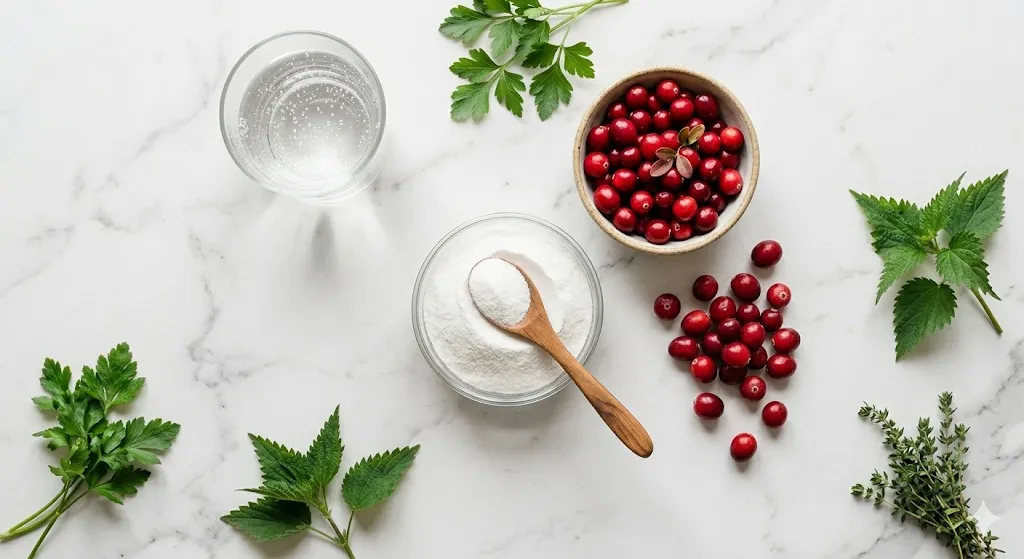
A 2023 Cochrane review of 50 studies found that cranberry products reduce UTI risk in women with recurrent UTIs, in children and after certain medical procedures. More in our article on cranberry for kidneys and urinary tract.
3. Vaginal estrogen after menopause
After menopause the tissue changes and protective lactobacilli decline. Local estrogen (cream or insert) has been shown to lower infection rates in postmenopausal women. It requires a prescription – ask your gynecologist.
4. Methenamine hippurate
This urinary antiseptic was non-inferior to daily low-dose antibiotic prevention in a UK trial (ALTAR, BMJ 2022) – without the risk of resistance. Prescription only, but an important alternative.
5. D-mannose – a new trial disappoints
D-mannose was long seen as an insider tip. The largest trial so far (MERIT, JAMA Internal Medicine 2024) with 598 women found no significant difference, however: 51% on D-mannose versus 56% on placebo had another infection within six months. It can no longer be recommended for prevention.
Everyday tips
- Don't hold urine for long, and empty your bladder completely.
- Urinate after sex (weak evidence, but harmless).
- Spermicides and diaphragms can increase risk – consider switching contraception.
- Avoid constipation.
When to see a doctor
With fever, flank pain, blood in the urine, pregnancy, in men, or if symptoms don't improve within 2–3 days. With more than two infections in six months, a medical work-up and prevention plan are worthwhile.
Frequently asked questions
What works best against recurrent UTIs? Well supported are drinking more, cranberry (in women with recurrent UTIs), vaginal estrogen after menopause and methenamine hippurate.
Does D-mannose work? The largest trial so far found no significant benefit.
Do probiotics help? The evidence is weak so far.
Cranberry supplements with standardized PAC content and water bottles can be found in our recommendations below.