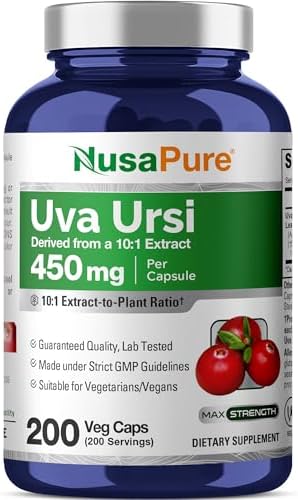
Bearberry leaves (Arctostaphylos uva-ursi) are among the oldest herbal remedies for bladder infections. Their key compound is arbutin, which the body converts into antibacterial hydroquinone.
How bearberry works
After absorption, arbutin is excreted by the kidneys into the urine, where it is converted into its active form. In the urinary tract it inhibits the growth of bacteria – so its effect is concentrated exactly where the infection sits.
Use & notes
- As a tea or ready-made preparation per the label, usually for a few days.
- Do not use for longer than about a week and at most a few times a year.
- Some sources recommend a rather alkaline urine for the best effect.
Caution & when to see a doctor
Because of the hydroquinone, bearberry is intended for short-term use only and is not suitable for pregnant or breastfeeding women or anyone under 18. The current EU herbal monograph from the European Medicines Agency (EMA, 2018) limits use to adult women, advises against use in men and rules it out with kidney disorders. If symptoms last longer than 4 days while taking it, see a doctor. Urine may turn greenish-brown. With fever, flank pain, blood in the urine or no improvement, medical treatment is required.
Frequently asked questions
How long may I take bearberry? Usually only a few days and no more than a few courses per year.
Who should avoid bearberry? Pregnant and breastfeeding women, anyone under 18 and people with kidney disorders; the EMA also advises against use in men. Other measures should be used instead.
What does “uva ursi extract 500 mg” mean? The number usually refers only to the weight of the extract. What matters is its arbutin content (hydroquinone derivatives): the EMA monograph gives a single dose of dry extract equivalent to 100–210 mg arbutin, 2–4 times a day, up to 840 mg daily – for no more than one week. Follow the label.